
Understanding Cleanroom ISO Classification Standards
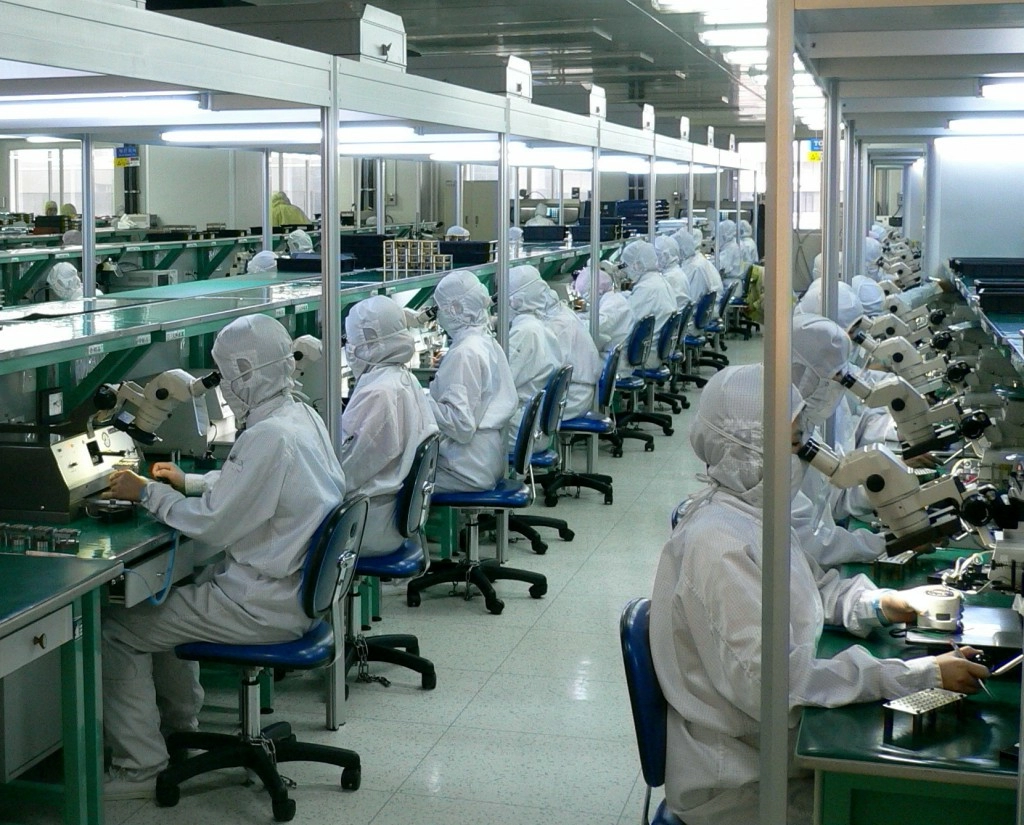
No two cleanrooms are the same. Due to the variety of complex products being manufactured across the world, every item requires different cleanliness standards in the production process. To meet the regulations for a given product, a specific type of cleanroom with a certain cleanliness standard is often required. Everything from facility design to gowning protocol to cleaning procedures is affected by this level of cleanliness, which ultimately drives the decisions you make in that cleanroom.
How is Cleanroom Cleanliness Defined?
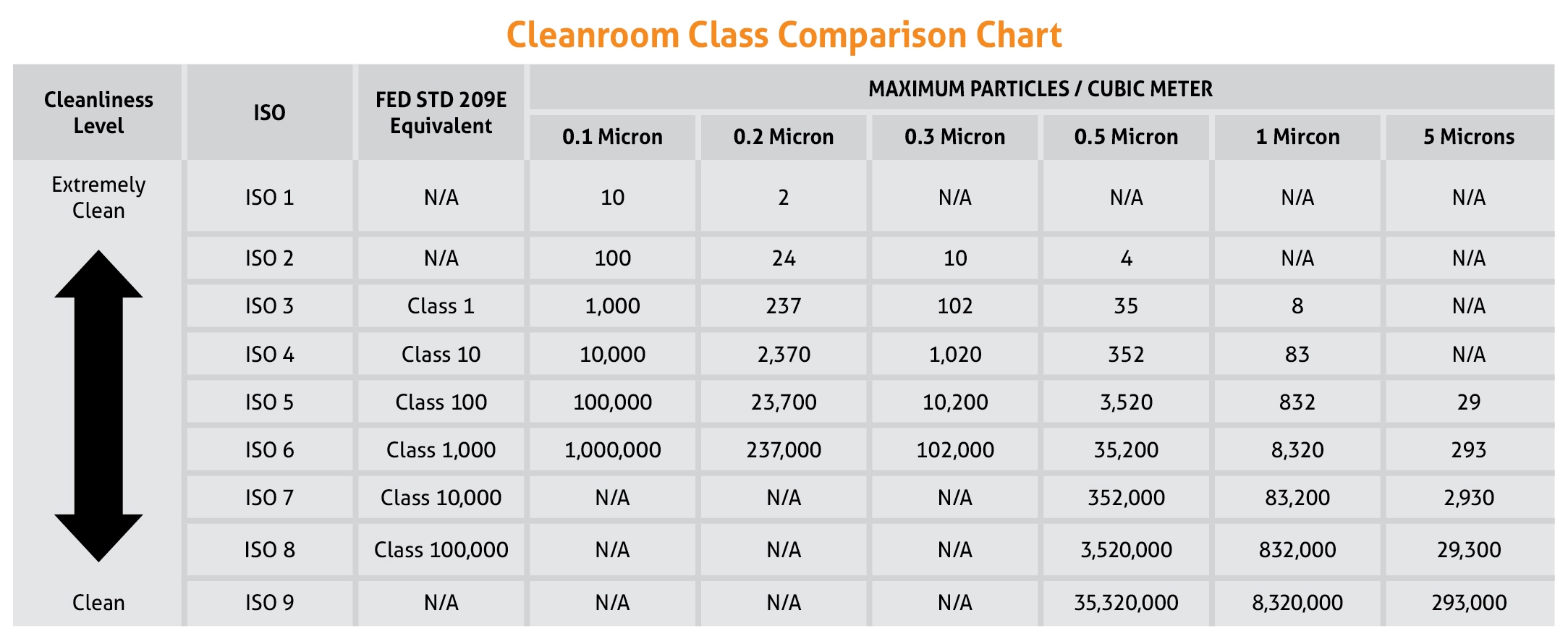
Cleanroom cleanliness is defined using multiple different classes, each using particle size counts to set them. These classes are referred to as the ISO classification standards, which are broken up into 9 different classes: ISO 1, ISO 2, ISO 3, ISO 4, ISO 5, ISO 6, ISO 7, ISO 8, and ISO 9.
Cleanroom cleanliness is also defined by another classification system, which was established before the introduction of ISO. Popularly known as the US Federal Standard 209E, this system also uses particle size counts to set each class. Each of these standards are broken up into 6 different classes: Class 1, Class 10, Class 100, Class 1,000, Class 10,000, and Class 100,000.
Within each of these classes, there is a maximum limit to the amount and size of particles that is allowed per cubic meter of air. Once the particle limit in one classification is reached, a cleanroom falls into a different ISO standard.
This system correlates with the ISO classification system as indicated in the following table:
Identifying ISO Classes for Different Cleanroom Types
Depending on the product being manufactured in a cleanroom, a specific ISO classification can be required. Some highly regulated products may need cleanrooms with lower ISO classes, which is often a rigidwall or hardwall structure. In less regulated industries, cleanrooms generally fall into a higher ISO number (like ISO 8). These cleanrooms are more commonly softwall or modular structures, as they do not need to be as strictly maintained. By rule of thumb, the smaller the ISO number, the cleaner an environment is required to be. This is not always the case, however, so it is important to consult cleanroom experts to determine the best fit for your specific product or industry.
A History of Cleanroom ISO Standards
According to Beckman Coulter Life Sciences, cleanroom classification and standards in the US were originally covered by the US Federal Standard 209E, which was first published in 1963. This system was defined by six classes of cleanliness from 1 to 100,000 where the class number correlated with the maximum number of micron (0.5 micron or larger) particles that were acceptable in the air.
As cleanrooms evolved and became more popular, the demand for wider ranging standards was on the rise, which led to the formation of a technical committee named the International Standards Organization, or ISO. According to IEST, the goal of ISO was to standardize equipment, facilities, and operational methods for cleanrooms and controlled environments. This included procedural limits, operational limits and testing procedures to minimize micro contamination. In 1999, ISO 14644-1 was published, and shortly afterwards officially superseded Fed 209E.
The Importance of Cleanroom ISO Standards
After all that has been said about ISO standards, it is safe to say that these 9 different classifications ultimately determine every decision you make in a cleanroom. From what types of products can be manufactured in that cleanroom to what garments you are allowed to wear inside of it, it is best to know the ISO standard of a cleanroom before you begin making any decisions.
Find the Right Cleanroom for You With Flow
Determining the right type of cleanroom for your project can be complex and confusing. With varying regulations and different ISO requirements, it can be hard to know where to begin. At Flow Cleanrooms, our cleanroom product guides and superb customer support can help you along every step of the selection process. Contact us to find your cleanroom solution.

Still have questions?
Our team of cleanroom experts are here to help. Call us at (616) 719-4470 or send us a message.

Explore More!
We strive to bring you the latest relevant information.